
Want to turn your free trial users into loyal paying customers in 2025 but have no clue how? Or maybe you’re worried users will just sign up, poke around for five minutes, and ghost your app forever? Many SaaS founders put all their effort into their app, only to watch users churn without upgrading. This is why.
Why do users sign up but never come back?
Most users sign up impulsively so unless your emails grab them instantly and show them a way to a quick win, they’ll forget your app exists. That’s why you need to know how to write welcome emails that get opened and spark that first “aha!” moment.
What’s the real goal of an onboarding email sequence?
It’s not just about reminding users your app exists. This video explains why every email should drive users toward a quick win inside your app, not just reading about it. The faster they experience value, the higher your conversion rates.
What specific emails should you send to turn free trials into paid plans?
7 emails shared in this video that every SaaS onboarding should have:
- The irresistible welcome email
- The “meet your success team” email
- The helpful links email
- The inspiring case study email
- The rich media email that educates & entertains
- The trial-end reminder that sparks urgency
- The post-trial re-engagement email to win back stragglers
Understanding the User’s Mindset
It’s important to understand the context of onboarding. Users sign up for your app hoping to make positive changes in their lives. They’ve responded to your marketing message and have decided to give your app a chance. Your role is to ensure they not only try your product but also see enough value to commit to a paid plan. Consider the environment in which your emails are arriving. For instance, users opening their inboxes on a busy Monday morning might simply be clearing clutter. Your emails are competing for attention in these crowded and busy inboxes so they must be compelling.
Goals of an Onboarding Sequence
The first aim of an onboarding email sequence is twofold. Firstly, to transition users from a free to a paid subscription. Secondly, every individual email in the sequence should encourage users to explore the app further. Most SaaS applications feature in-app tutorials and guides; your emails should complement these resources, guiding users to those first transformative experiences within the app that highlight its value.
The Essential Elements of Your Email Sequence
1. Welcome Emails
This is your start point. Instill excitement about the potential transformation of your app. It’s less about overwhelming them with features and more about prompting those first steps that lead to a quick “win.” Make sure to include a clear call to action linking them directly to sign in.
2. Team Introduction Emails
Introduce a key team member, such as a customer success agent. Even if it’s a virtual introduction, personalization creates a connection and reinforces that there’s a committed team behind the app ready to help.
3. Helpful Links Emails
Provide the users with helpful resources, but make sure not to overload. Link to specific parts within your app that help the user or solve common roadblocks, showing users you understand what they need.
4. Case Study Emails
Sharing real life examples of users who have successfully used your app shows your app’s promises. These stories make powerful proof points and emotional triggers for future users.
5. Rich Media Emails
Use videos or other rich media strategically when users may not be ready to dive into the app. An educational yet entertaining video can re-inspire and break down hurdles users might face in understanding the app.
6. Trial-End Reminder Emails
As users near the end of their free trial, their willingness to transition to a paid plan is crucial. Use targeted, persuasive emails to emphasize the additional value and features available with a paid subscription. Remember to invoke a sense of urgency.
7. Post-Trial Re-engagement Emails
Users who don’t convert still represent an opportunity. Reach out with updates, new features, or changes in response to past feedback. This demonstrates growth and a commitment to continuous improvement, potentially rekindling their interest.
Changing your approach
The effectiveness of your onboarding emails depends on your understanding of your users. Collecting and analyzing user data helps predict which actions lead to engagement and conversion. This data helps you personalize the email experience to make the content of your emails resonate on a personal level.
Why iteration is important
Finally, remember that your sequence is a dynamic tool. Post-trial outreach should let the user know about ongoing updates in your app or new success stories. Always change your approach based on results and and new market research. In conclusion, mastering your SaaS email onboarding strategy isn’t just about communication, it’s about building a bridge from a free experience to a paid one.
When you get your SaaS onboarding emails right
Here are the engagement numbers for a SaaS onboarding flow we wrote for one of our clients, Bento, an email marketing platform. We use them for our own email lists and often recommend clients migrate to them.
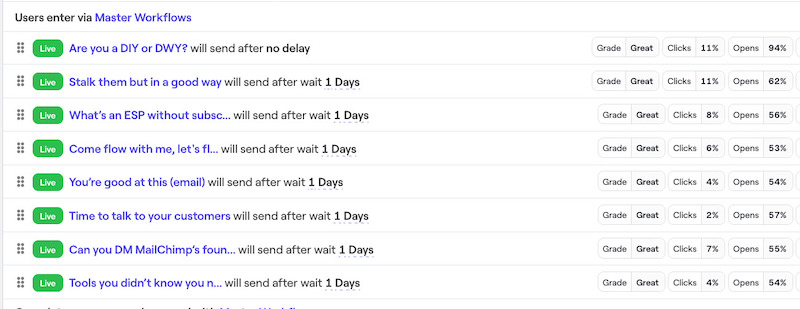
If you do it right, your first couple of emails ought to be getting over 70% open rates, dropping to around 40% by the end of the sequence. In the above screenshot, you can see Bento’s welcome sequence starts at over 90% open rate and drops to +50%.
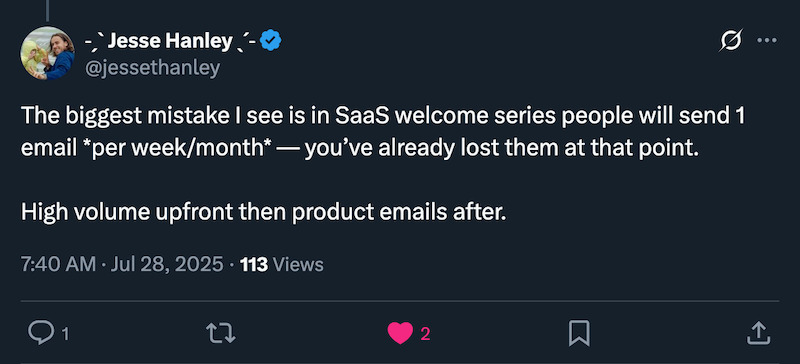
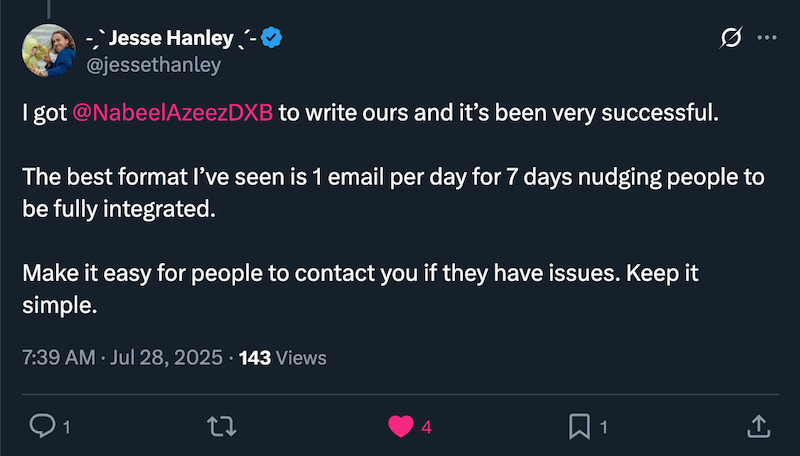
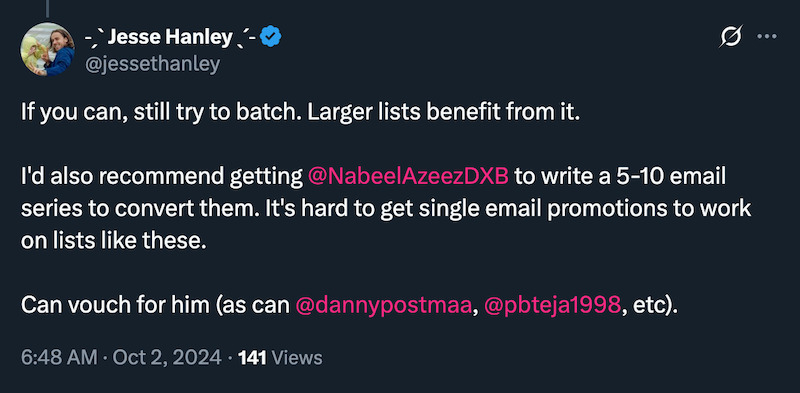
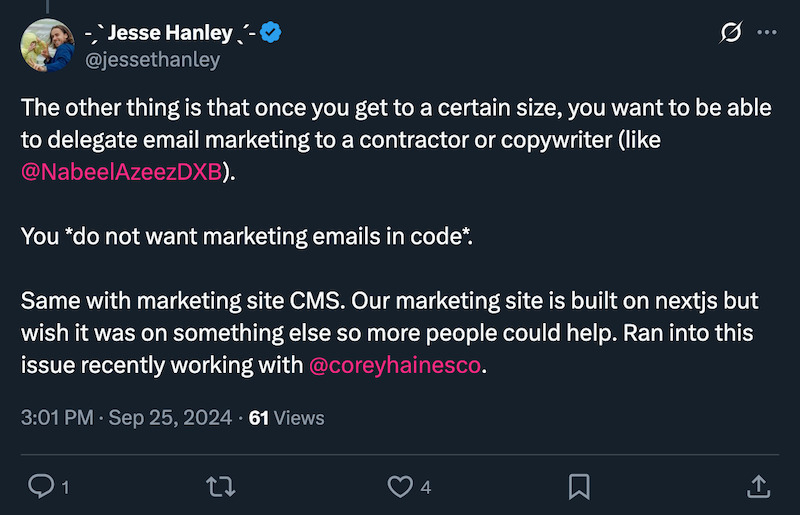
And here’s Bento’s founder, dropping SaaS onboarding sauce while singing our praises.
If you’re dealing with low user activation and high churn, the solution might be as simple as improving your onboarding flow. This is something Dropkick Copy can help you with. Have a 15-minute chat with us to find out for sure.
